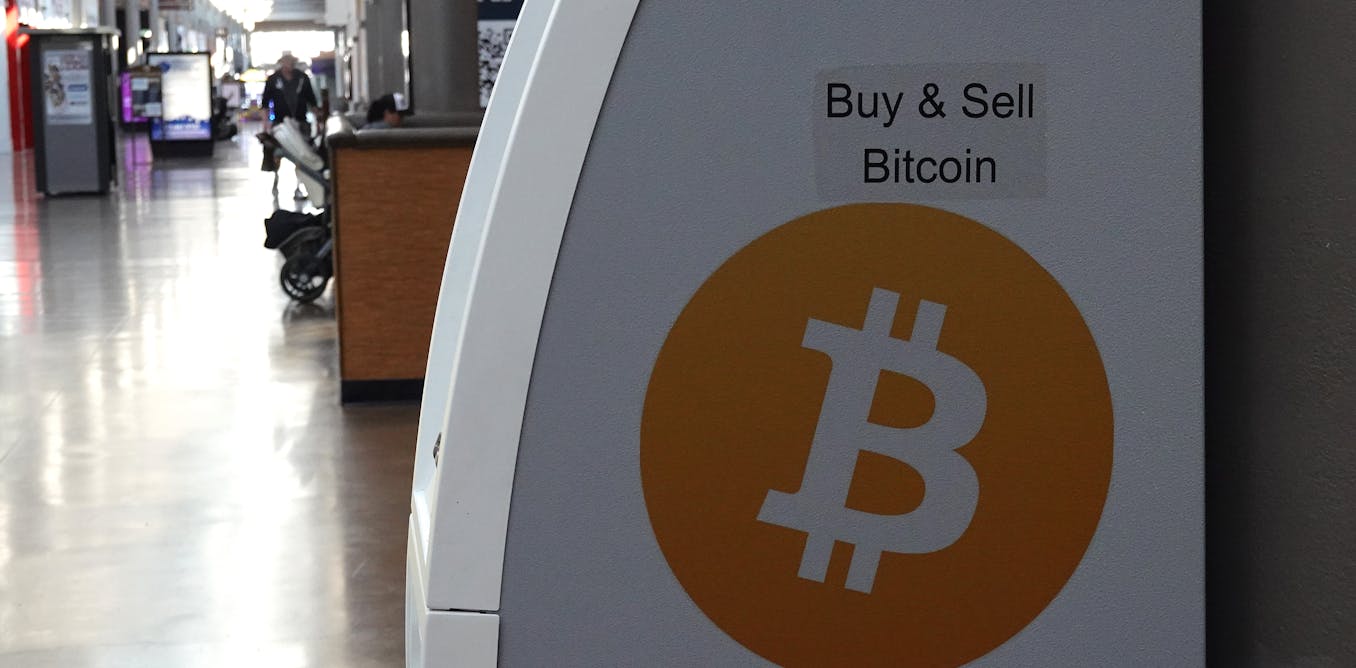
They’re stocked at dairies, gas stations and vape shops from Auckland to Invercargill – and, at first glance, they look like ordinary ATMs.
Rather, they are cryptocurrency ATMs. Increasingly, they pose one of New Zealand’s most difficult anti-money laundering challenges.
Although New Zealand first experimented with cryptocurrency ATMs more than a decade ago, they remained a novelty until 2023, when commercial operators began rolling out permanent networks. Today there are around 200 across the country.
As they expand, there are concerns that these machines could be exploited by scammers and organized crime groups to convert cash into hard-to-trace virtual assets.
Supporters, meanwhile, say they offer cash-dependent New Zealanders a way to access cryptocurrencies and other digital payment technologies.
These competing concerns have prompted the government to consider banning crypto ATMs altogether. Instead, he opted for targeted regulation, arguing that risks can be managed without removing legitimate access.
Whether these machines become a legitimate part of the country’s financial system or a growing source of consumer harm and criminal abuse will ultimately depend on whether appropriate safeguards are in place.
What are crypto ATMs?
Cryptocurrencies are digital assets that can be transferred without the need for a central bank or conventional banking system, and their use has grown rapidly around the world.
The ATMs that provide access, however, work much like the vending machines that most people are already familiar with. Insert cash, scan a QR code and Bitcoin or another cryptocurrency – rather than bank notes – is sent to a digital wallet.
While there are “two-way” crypto ATMs that allow users to sell cryptocurrencies for physical cash, the vast majority of machines in New Zealand are “one-way” – functioning solely as cash deposit kiosks to purchase virtual assets.
In New Zealand, operators require customers to verify their identity before they can purchase cryptocurrencies. Once verified, the transaction can usually be completed in just a few minutes.
A…
..