

Key points to remember:
- Ether derivatives metrics adopt a sharply bearish bias as cascading liquidations cut off a relief bounce.
- Critical ZCash bug discovered by AI triggers widespread fears of contagion, leading to Ethereum TVL contraction.
Ether (ETH) fell to a 13-month low of $1,540 on Friday, following the downtrend in the broader cryptocurrency market. Traders now fear a deeper price correction, given weak ETH derivative metrics and increased risk after a bug was discovered in the Zcash blockchain.
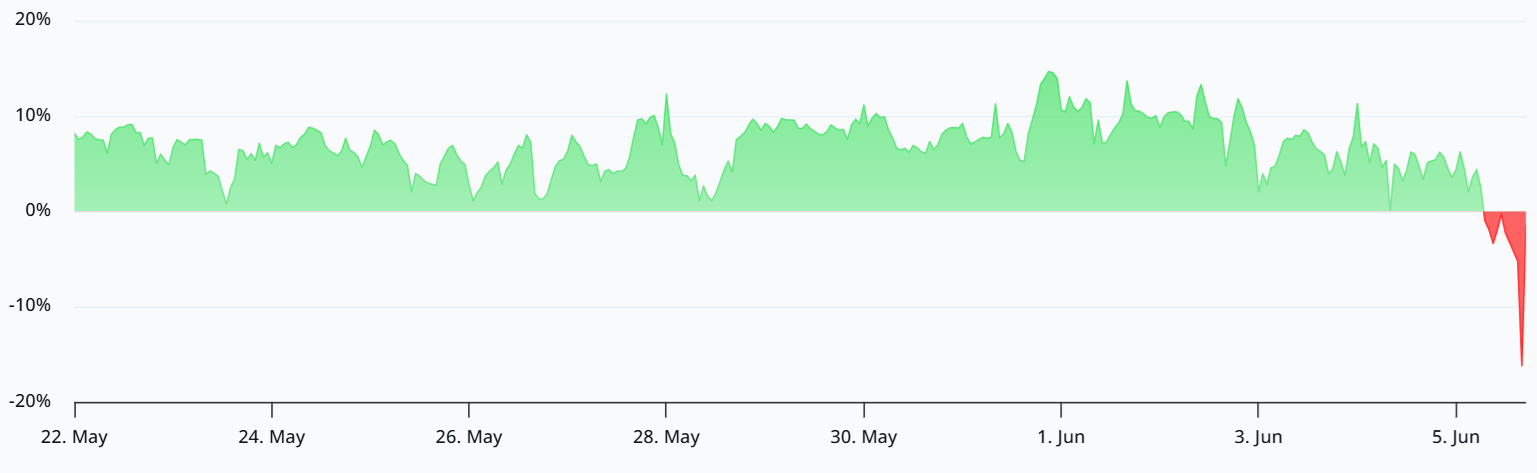
Annualized funding rate of ETH perpetual futures contracts. Source: Lightness
The annualized funding rate for Ether futures turned negative on Friday, indicating increased demand for short positions. Even though ETH is trading 67% below its August 2025 all-time high, the bulls’ confidence has been shattered after $1.28 billion of leveraged long positions were liquidated over 5 days.
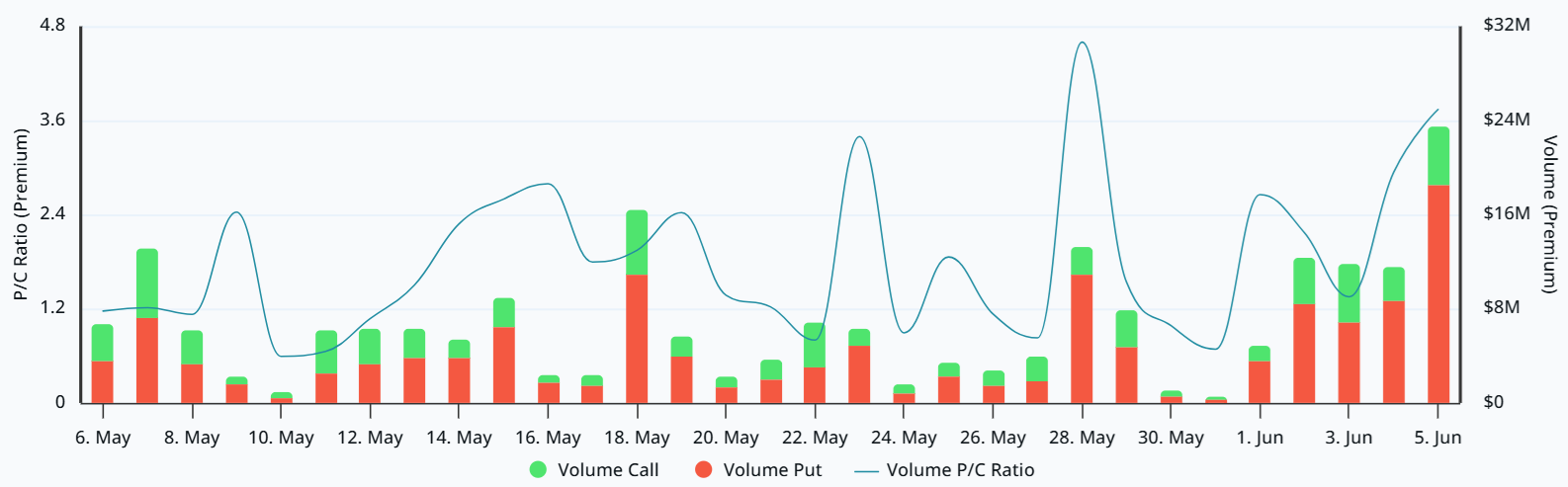
Premium put-to-call ratio of ETH options at Deribit. Source: Laevitas
Demand for downside price protection increased as the Deribit ETH options put premium soared to 3.7x on Friday. The indicator has consistently shown excess demand for put options since Monday. Low holder conviction fuels uncertainty, giving bears an easy way to take control.
ETH price followed Zcash: why?
The sharp decline in the Ethereum network’s total value locked (TVL) to its lowest level since February 2024 also had a negative impact on trader confidence. Smaller deposits in decentralized applications (DApps) tend to reduce ecosystem revenue, ultimately reducing demand for the use of ETH in smart contracts.
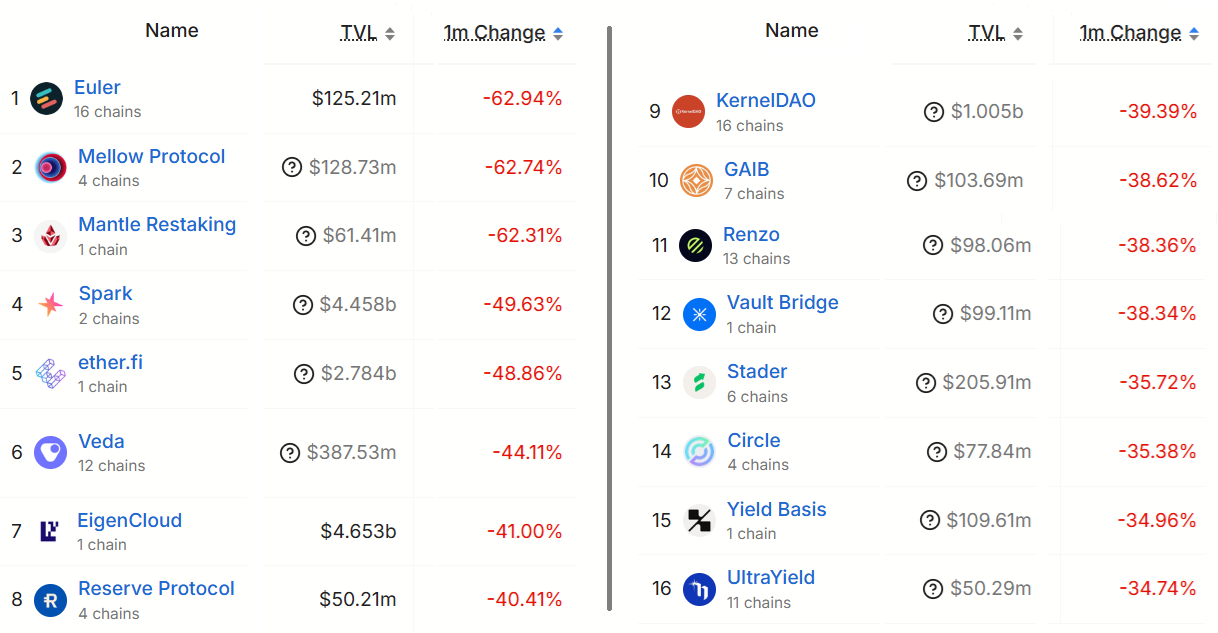
Ethereum DApps Network Total Value Locked, USD. Source: DéfiLlama
Some of Ethereum’s top DApps saw severe TVL contractions, including Spark (-50%), Ether.fi (-49%), EigenCloud (-41%), and KernelDAO (-39%). Part of the smart contract exodus can be attributed to a critical vulnerability allowing unlimited ZEC minting in the largest ZCash zero knowledge pool. The bug was found on May 29 using Anthropic’s Opus 4.8 AI model.
Since the ZCash bug existed since 2022 without anyone detecting it, traders fear that other blockchains and smart contracts could also be at risk. Advances in detecting security vulnerabilities using AI have put investors on alert, especially after cryptocurrency hacks totaled $630 million in April.
KelpDAO’s $293 million hack and Drift Protocol’s $280 million exploit accounted for 82% of monthly losses across 25 protocols, sparking panic in the decentralized finance (DeFi) industry. The hacks occurred on multiple networks, including Ethereum, Solana, Base, BNB Chain, Sui, and PulseChain.
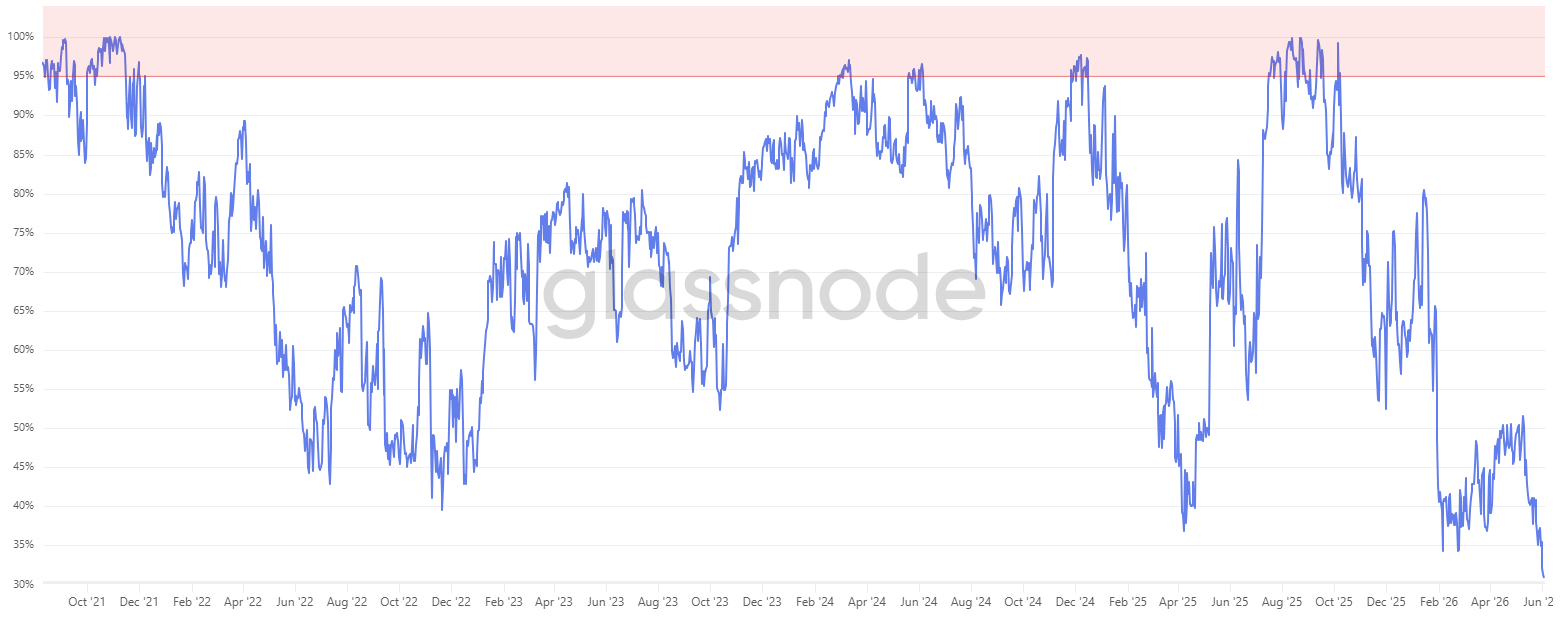
Percentage of ETH supply in profit since their last move. Source: Glass knot
Currently, only 30% of ETH supply is profitable compared to the last movement of these coins. This pattern has only happened a few times in history, with the most recent instance being the COVID crash in mid-March 2020. Before that, this strong buy signal also emerged in mid-December 2019, preceding a 118% rally in 60 days.
Related: FG Nexus offloads another $17.8 million in ether as losses exceed $100 million
With over $500 million in leveraged ETH long positions liquidated in 48 hours, there is no sign of a relief rebound. The largest Ethereum treasury company, Bitmine (BMNR US), is experiencing an unprecedented unrealized loss of $10.5 billion as the company owns 4.5% of the entire ETH supply.
ETH could fall further below $1,550 as investor confidence deteriorates following several hacks in the DeFi industry and the inflationary bug discovered in the protected Zcash protocol.