Key points to remember:
- WLFI sold 5.9 billion tokens privately without disclosing the buyers, sending the token to an all-time high.
- Early investors who purchased WLFI at $0.05 remain locked out of 80% of their holdings in May 2026.
- WLFI is pushing for a vote to unlock 62 billion tokens, raising concerns that it will benefit insiders over early backers.
Private sales, blocked investors and a record high
Sales, confirmed in governance documents and reported by Bloomberg, were concluded in private “white glove” transactions with qualified investors after two public fundraising rounds. already raised more than 550 million dollars. World Liberty Financial (WLFI) declined to reveal who purchased the 5.9 billion tokens or where the proceeds went, with sources suggesting that a large portion of the funds went to entities affiliated with the founders.
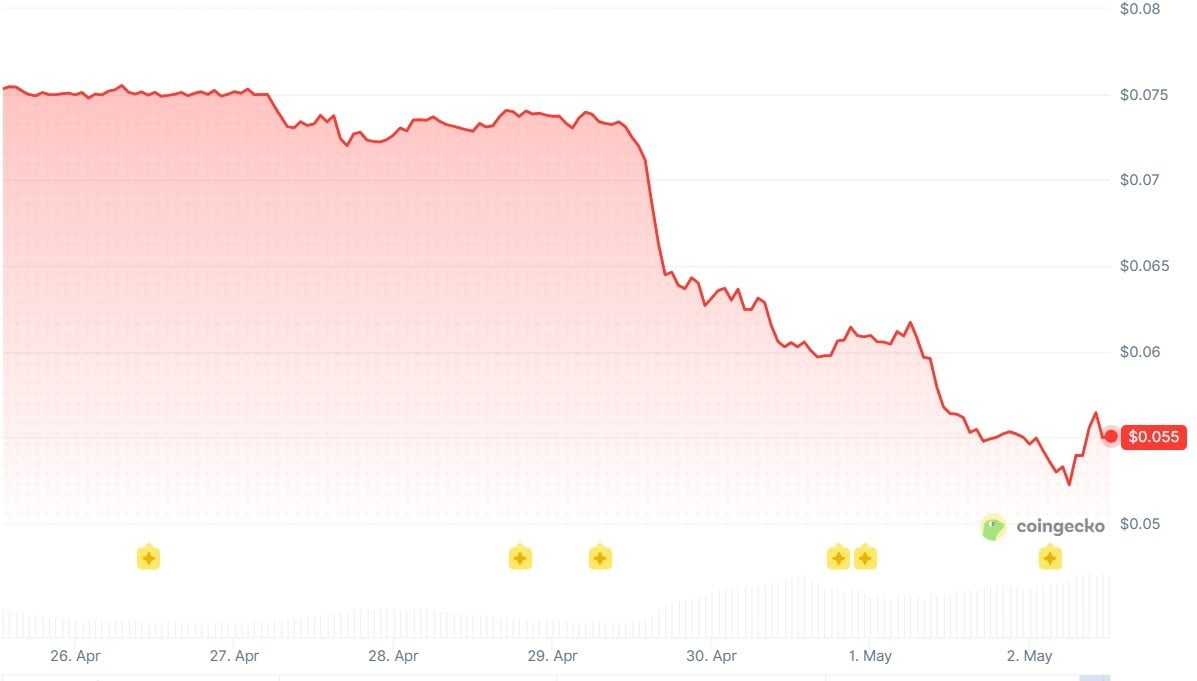
For early investors, the revelations were harsh, as those who purchased WLFI tokens at prices as low as $0.05 during public rounds currently cannot sell 80% of their holdings. Private buyers, meanwhile, received tokens through a separate channel on terms not disclosed to the broader investor base. WLFI fell to an all-time low on the news, with the token collapsing as retail holders absorbed the dilution.
World Liberty Financial was co-founded by the Trump family and the Witkoff family. The Trump family receives 75% of all WLFI token revenue under the project’s token structure, a figure that has attracted sustained political attention. Senator Bernie Sanders claimed that The Trump family made $4 billion of the presidency, with 3 billion dollars allocated to crypto companies, citing WLFI as a central example.
Unlocking of 62 billion tokens deepens controversy
Private sales aren’t the only governance hot spot, as WLFI lobbies towards an unlocking of 62 billion tokens with a near-unanimous vote on governance, a move that critics say is timely to benefit insiders. The unlocking is expected to take effect after President Trump’s term ends, a detail that has sparked accusations that the project is structured to allow founding participants to exit before any regulatory accountability is strengthened.
Previously, WLFI used 5 billion of its own tokens as collateral to borrow $75 million from Dolomite, a platform co-founded by one of the project’s own advisors. The conflict of interest drew significant criticism from the community at the time and is now part of a larger pattern.
Broader questions about transparency emerge
The accumulation of undisclosed private deals, insider borrowing deals and token releases after the presidency creates a picture that critics have been painting for months. A recent breakdown of Trump crypto Ventures ranked WLFI as the most controversial of the four projects due to its opacity and the scale of founder compensation compared to public investors.
The draft confirmed that private sales took place, but did not address the lack of disclosure to existing investors.